
How Home Appraisals Work for Buyers in Northwest Indiana: What to Expect and How to Prepare
Key Takeaways
- A home appraisal protects your lender by confirming the property is worth the purchase price; it also protects you from overpaying.
- Appraisal costs in Northwest Indiana typically run $400 to $700, paid by the buyer during the mortgage process.
- If the appraisal comes in low, you can negotiate with the seller, bring cash to bridge the gap, challenge the appraisal, or walk away if you have an appraisal contingency.
- Knowing the local market before you make an offer helps you choose a price that is competitive and realistic.
- An experienced local realtor can help you interpret the appraisal report and guide your next steps.
You found the home. You made an offer. It was accepted. Congratulations are in order, but the process is not over yet. One of the most important steps between accepted offer and closing table is the home appraisal.
If you are buying a home in Northwest Indiana, understanding how appraisals work can save you stress, money, and surprises. As someone who has personally bought and sold six properties and negotiated dozens of transactions for clients across Munster, Crown Point, Schererville, Dyer, St. John, Highland, and Hammond, I can tell you that the appraisal is where many deals either sail through or hit their first real bump.
Let me walk you through exactly what a home appraisal is, why it matters, and what you can expect here in Northwest Indiana.
What Is a Home Appraisal and Why Is It Required?
A home appraisal is an independent, professional estimate of a property's market value. Your lender requires an appraisal to make sure the home is worth the amount you are borrowing. If the home is worth less than your offer, the lender will not lend you the full purchase price, because they do not want to be left holding a loan that exceeds the property's value if you default.
The appraisal also protects you as a buyer. It confirms that you are not overpaying for the property based on current market conditions. That is a powerful safeguard, especially in a market like Northwest Indiana where competition can drive prices up in desirable neighborhoods.
Appraisals are conducted by licensed or certified appraisers who have no personal or financial interest in the property. They are trained to provide an objective, data-backed opinion of value based on comparable sales, property condition, location, and current market trends.
How Much Does a Home Appraisal Cost in Northwest Indiana?
Home appraisal costs in Northwest Indiana typically range from $400 to $700 for a single-family home, depending on the property's size, complexity, and location. The fee is usually paid upfront by the buyer as part of the mortgage application process. For reference, NAR research tracks appraisal trends and housing data that inform local markets nationwide.
For comparison, appraisal costs in the Chicago suburbs often run $500 to $900 for a similar home. The somewhat lower fees in Northwest Indiana reflect the generally lower home prices and appraiser availability in the region. The FHFA House Price Index provides national home price trends that help put local appraisal data in context.
What Does an Appraiser Look For?
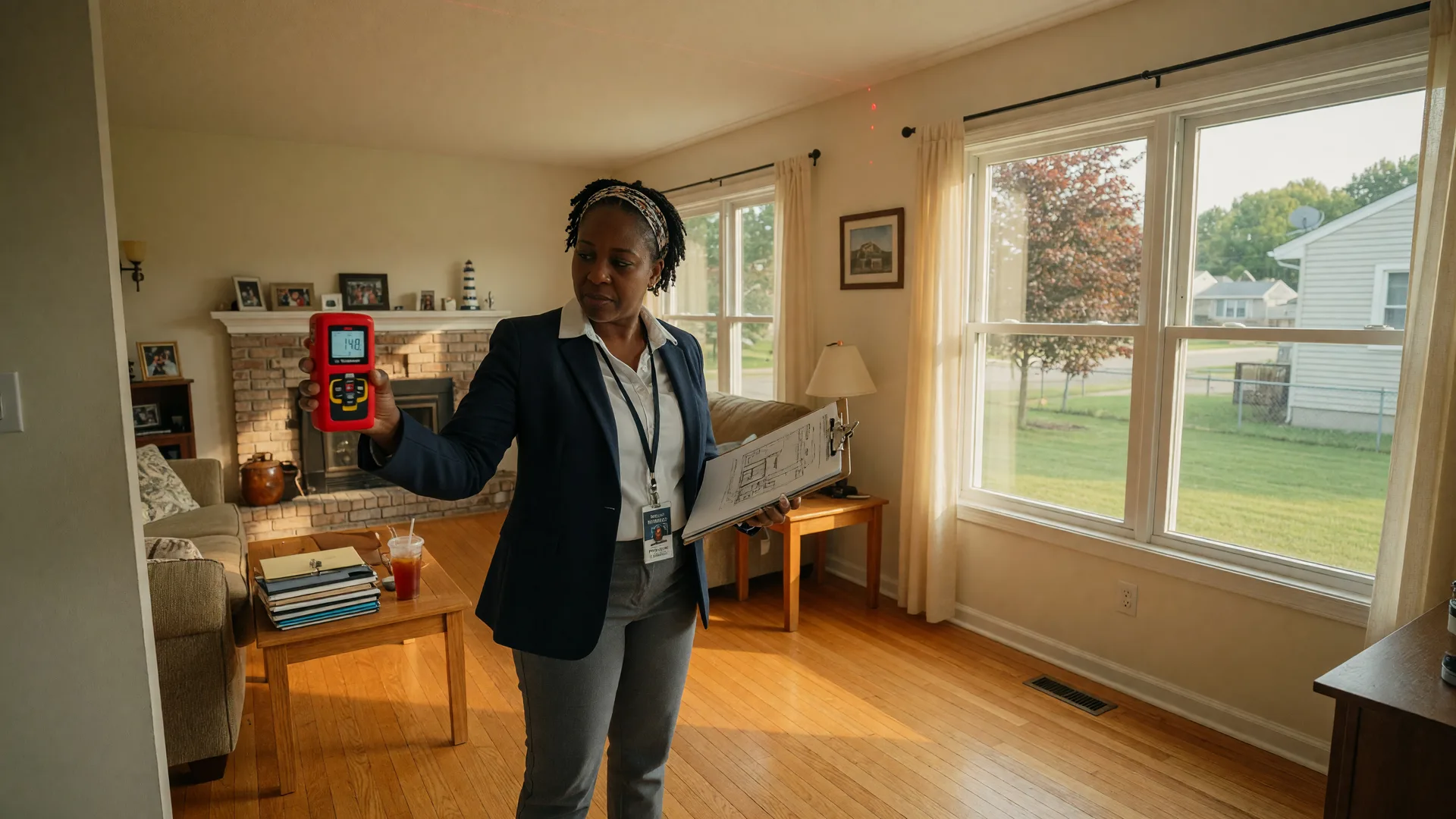
When the appraiser visits the property, they conduct a thorough inspection of both the interior and exterior. They look at:
- Square footage: Total living area measured room by room.
- Bedrooms and bathrooms: Count, size, and condition.
- Overall condition: Age of the home, recent updates, wear and tear, and visible maintenance issues.
- Major systems: HVAC, electrical, plumbing, and roof condition.
- Kitchen and bathrooms: Quality of finishes, countertops, cabinetry, and appliances.
- Flooring and fixtures: Type, quality, and condition.
- Lot size and location: Property dimensions, neighborhood quality, street appeal, and proximity to amenities.
- Structural elements: Foundation, framing, and exterior condition.
The appraiser also photographs the property's interior and exterior and takes note of any obvious defects or deferred maintenance.
After the inspection, the appraiser researches recent sales of comparable properties, commonly called "comps." These are homes similar in size, age, condition, and location that have sold in the last three to six months. The appraiser adjusts for differences in features, square footage, and condition to arrive at a value estimate.
How Long Does the Appraisal Process Take?
The on-site inspection typically takes 30 to 60 minutes for a standard single-family home. The appraiser then compiles their findings into a detailed report, which is usually delivered within 3 to 10 business days depending on the appraiser's workload and the property's complexity.
In a slower market or for a straightforward property, you may get the report back in three to five days. In a busy season or for a more complex property like a large custom home or one with acreage, it can take a week or more. If you are on a tight timeline to close, your realtor and lender can work together to find an appraiser who can deliver quickly.
The appraisal is a critical milestone in your closing timeline. Once the report is received and reviewed, the lender can finalize your loan approval and move toward the closing date.
What Happens If the Appraisal Comes in Low?
This is the scenario every buyer hopes to avoid, but it happens more often than you might think, especially in a competitive market where buyers are stretching to win. A low appraisal means the appraiser determined the home is worth less than your offer price.
If your contract includes an appraisal contingency, you have several options:
- Negotiate with the seller. You can ask the seller to lower the price to the appraised value. In many cases, sellers agree rather than risk the deal falling through and having to start over.
- Make up the difference in cash. If you have the funds, you can pay the gap between the appraised value and your offer price out of pocket.
- Challenge the appraisal. If you and your realtor believe the appraiser missed key comparable sales or made an error, you can request a reconsideration of value by providing additional comps or information.
- Walk away. If none of the above options work and you have an appraisal contingency, you can cancel the contract and receive your earnest money back.
If you waived the appraisal contingency to make your offer more competitive, you may be obligated to proceed at the contract price regardless of the appraised value. This is a risk that you and your realtor should discuss carefully before deciding to waive it.
Understanding your closing costs is also important when planning for an appraisal gap, since the cash you need at closing goes beyond just the difference in price.
How Appraisals Differ From Home Inspections
Many first-time buyers confuse the appraisal with the home inspection. They serve very different purposes.
The appraisal is for the lender. It determines the property's market value to ensure the loan amount is justified. It is not a technical evaluation of the home's condition.
The home inspection is for you, the buyer. It examines the property's structural and mechanical condition, identifying defects, safety issues, and needed repairs. While the appraiser notes obvious condition issues, they are not performing a thorough inspection.
Both are essential parts of a well-managed home purchase. If you are buying your first home, I recommend reviewing my complete first-time buyer guide for Northwest Indiana to understand how the entire process works from start to finish. For a deeper look at inspections specifically, read the home inspection guide for buyers and sellers.
How to Prepare for a Smooth Appraisal as a Buyer
You cannot control the appraiser's opinion of value, but you can set yourself up for a smoother process:
- Price your offer strategically from the start. An experienced local realtor can help you craft an offer that is competitive but supported by comparable sales data. This reduces the likelihood of an appraisal gap.
- Include a realistic appraisal contingency. In most cases, keeping the contingency protects you without weakening your offer too much, especially in Northwest Indiana where bidding wars are less intense than in Chicago.
- Ask your lender to order the appraisal early. The sooner the appraisal is ordered, the sooner you get the report, and the more time you have to negotiate if needed.
- Stay in close communication with your realtor. I stay in touch with the listing agent and the appraiser's office to keep the process moving and address any questions promptly.
What Buyers in Northwest Indiana Should Know About Appraisal Trends
Northwest Indiana's real estate market has seen steady appreciation over the past several years, driven by buyers relocating from Illinois, new construction in Dyer, St. John, and Crown Point, and the South Shore Line's Monon Corridor expansion connecting more communities to downtown Chicago.
In communities like Munster and Crown Point, where demand is strong and inventory is often tight, the market value of homes has kept pace with or exceeded rising prices. That generally supports appraisals coming in at or near the contract price. However, in pockets where prices have risen quickly, appraisals can occasionally lag behind recent sold prices if the appraiser relies on older comparable sales.
This is where local knowledge matters. A realtor who knows what homes in your target neighborhood have actually sold for (not just what they are listed for) is essential when setting expectations for the appraisal.
For a deeper dive into current price trends, read the August 2026 Northwest Indiana market update.
How a Great Realtor Helps You Navigate the Appraisal
Your realtor is your advocate throughout the appraisal process. Here is how I help my buyers:
- I review the appraisal report carefully and explain what it means for your purchase.
- If the appraisal comes in low, I help you assess your options and negotiate with the seller or listing agent.
- I prepare a list of comparable sales and recent market data before the appraisal, so the appraiser has the full picture.
- I coordinate with your lender to keep the timeline on track.
- Most importantly, I make sure you feel informed and confident at every step.
When you work with someone who has been through dozens of appraisals and knows the Northwest Indiana market inside and out, you are not navigating the process alone.
If you want a full overview of what it takes to buy a home in Northwest Indiana, explore the complete buying guide. For more buyer-focused tips, see the closing costs guide for Northwest Indiana and the why you need a realtor article.
Your home purchase is one of the biggest financial decisions you will ever make. The appraisal is a safeguard that makes sure you are making a sound investment. With the right preparation and a trusted local realtor, you can handle whatever the appraisal report brings.
Ready to start your home search or discuss your next move? I would love to hear from you. Schedule a free consultation or call (219) 670-3704. No pressure, just honest guidance from someone who has been exactly where you are.
Related Reading
Closing Costs in Northwest Indiana
What buyers and sellers actually pay at the closing table, with tips on how to save.
Home Inspection Guide for Buyers and Sellers
Everything you need to know about home inspections in Northwest Indiana.
Complete First-Time Buyer Guide
Step-by-step advice for buying your first home in Northwest Indiana.
Northwest Indiana Neighborhoods
Explore Munster, Crown Point, Dyer, Schererville, St. John, Highland, and Hammond.
Read the Buyer's Guide or explore all neighborhoods.
Frequently Asked Questions
What is a home appraisal and why do I need one as a buyer?
A home appraisal is an unbiased estimate of a property's market value conducted by a licensed or certified appraiser. Your lender requires it to confirm the home is worth the amount you're borrowing. If the appraisal comes in at or above your offer price, you're in good shape. If it comes in lower, you may need to negotiate, bring extra cash to cover the gap, or walk away.
How much does a home appraisal cost in Northwest Indiana?
Home appraisal costs in Northwest Indiana typically range from $400 to $700 for a single-family home, depending on the property's size, complexity, and location. The fee is usually paid upfront by the buyer as part of the mortgage application process.
What happens if the appraisal is lower than my offer?
If the appraisal comes in below your offer price, you have several options. You can negotiate with the seller to lower the price to the appraised value. You can make up the difference in cash if you have the funds. You can challenge the appraisal if there are errors or missing comps. Or in some cases, you can walk away if your contract includes an appraisal contingency.
Can I be present during the home appraisal?
In most cases, the buyer is not present during the appraisal. The appraiser works independently and schedules access through the listing agent or seller. Your realtor will review the appraisal report with you once it's completed and discuss any findings that affect your purchase.
How long does the appraisal take and when will I get the report?
The on-site inspection typically takes 30 to 60 minutes for a standard single-family home. The full appraisal report is usually delivered within 3 to 10 business days after the inspection, depending on the appraiser's workload and the property's complexity.