
Selling the Family Home in Northwest Indiana: A Step-by-Step Guide for Empty Nesters
Last Updated: October 5, 2026

Key Takeaways
- Baby Boomers are the largest group of home sellers, and most older sellers move because the family home is now too large or they want to be closer to friends and family.
- The right time to sell is driven by your life, not the calendar, and fall is a strong window in Northwest Indiana with serious, motivated buyers.
- Decluttering comes before staging: sort one room at a time, keep the pieces that matter, and do not buy anything for the new home until after closing.
- Price strategically, not emotionally. The first two weeks on the market are the most powerful pricing window your home will get.
- Most Northwest Indiana downsizers stay local, moving to ranch-style homes, condos, or patio homes in Munster, Crown Point, Dyer, and Schererville.
Selling the family home is one of the biggest decisions a Northwest Indiana family will make, and it rarely happens on a calendar. The kids are grown, the rooms are quiet, and the house that was perfect for raising a family now asks more of you every year. This guide walks through the whole process, from knowing when it is time to decluttering, pricing, and choosing where to move next, so you can sell with confidence instead of pressure.
I have bought and sold six properties of my own, managed two vacation rentals for 12+ years, and spent 9 years as a Realtor in Northwest Indiana with 80+ homes sold. I have also helped dozens of empty nesters and their adult children sell longtime family homes in Munster, Crown Point, Dyer, and Schererville. I know the excitement, the nerves, and the sticker shock, and I have sat exactly where you are sitting.
Why Empty Nesters Are Selling the Family Home
This is not a niche situation. It is the most common move in American real estate. According to the National Association of Realtors' Generational Trends research, Baby Boomers are the largest group of sellers at about 53% of all sellers, and the top reasons older sellers move are that their home is too large and that they want to be closer to friends and family. Older Boomers typically own their homes about 16 years before selling, which means they bring serious equity to the table.
That matches what I see every week in Northwest Indiana. Most of my downsizing clients have owned their home for 15 to 25 years, raised their kids there, and built equity they can put to work in a smaller home, a retirement plan, or a move closer to grandkids. If that sounds like your situation, you are in very good company.
How to Know It's Time
There is no perfect moment, but there are reliable signs. Rooms you have not used in months. Maintenance that feels like a part-time job. Stairs that are getting harder. Adult children settled into homes of their own. Property taxes and utility bills that keep climbing. When the house starts taking more from you than it gives, that is usually the signal.
Many families also realize the home's value could do more for them elsewhere. The equity sitting in a 2,800-square-foot house can fund a comfortable, low-maintenance next chapter. The decision is emotional, and I never rush it. But I have watched too many families wait until a health scare or a forced move makes the decision for them, and that is the one version of this story I want to help you avoid.
The Emotional Side Comes First
Let me be honest with you: selling the family home is emotional. That kitchen where your kids did homework, the backyard where they played, the hallway where you measured them against the doorframe. These spaces hold memories, and I respect that deeply. My approach is never to rush you through the emotional side. I want you to feel confident, not pressured.
A few things help. Take photos of the house the way you want to remember it. Keep the pieces that genuinely matter, and let the rest go with a clear plan. And include your adult children early, so everyone is on the same page before the sign goes in the yard. The house is not the memories. The memories come with you.
Decluttering: Sort, Keep, Let Go
Decluttering comes before staging, and it is the step most families underestimate. Decades of accumulated stuff is the single biggest reason family homes feel small and sell slowly. Work one room at a time, and sort everything into three piles: keep, donate or sell, and toss. Start with the basement, attic, and garage, because that is where the hard stuff hides, and finish with the rooms buyers see first.
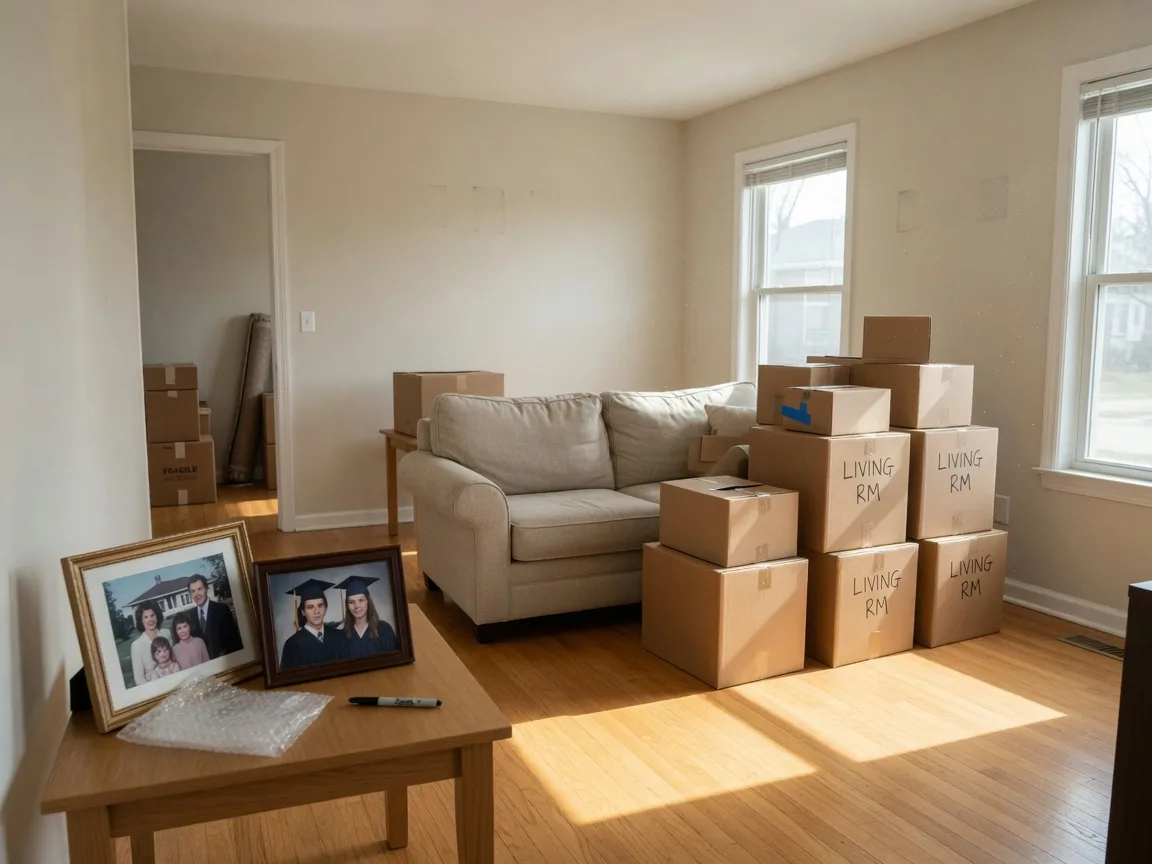
One rule I give every downsizing client: do not buy anything for the new home until after closing. It is tempting to shop for the next chapter while you are still packing the old one, but you will only move more stuff. Sell or donate first, move second, and buy what the new space actually needs after you know its dimensions. If you need a system for the moving side, my complete senior moving checklist covers packing, paperwork, and moving day in Northwest Indiana.
What to Fix and What to Leave Alone
Fix the things a home inspector will flag and a buyer will notice: peeling paint, broken fixtures, a furnace or water heater near the end of its life, and anything that affects safety. Leave the full renovations alone. In Northwest Indiana's typical $400,000 to $800,000 range, most buyers would rather pay a fair price for a dated kitchen than pay for a remodel they did not choose. My home inspection guide explains exactly what inspectors look for, so you can spend your prep dollars where they matter.
First impressions matter too. A tidy yard, a clean entry, and a fresh coat of paint on the front door cost little and pay off immediately. Buyers decide a lot in the first ten seconds, and a well-presented family home shows its best self from the curb.
Pricing It Right in Today's Market
Pricing is a marketing decision, not a math problem, and the first two weeks on the market are the most powerful window your home will get. If your house does not get an offer within two weeks, it is the market telling us it is priced too high. I price strategically, not emotionally, so your family home gets its strongest shot at top dollar in that opening window. My guide to pricing your home walks through the strategy in detail.
Context matters. Lake County's market has been balanced and steady through 2026, with the September 2026 market update showing median sale prices around $300,000 and inventory that favors neither side aggressively. And buyers are rate-sensitive right now: the average 30-year fixed mortgage was 7.28% as of October 1, 2026, according to Freddie Mac's weekly Primary Mortgage Market Survey. That means pricing and condition matter more than ever, because every buyer's monthly payment is stretched.
Where Northwest Indiana Downsizers Move Next
Most of my downsizing clients stay in Northwest Indiana. The most popular moves are to a smaller ranch-style home with a finished basement and low-maintenance yard in Crown Point, Dyer, or Schererville, or to a condo or townhome in Munster or Highland where the HOA handles the exterior. Patio homes and single-level condos are the fastest-growing segment of this market, because they offer the space people actually use without the upkeep they no longer want.
True age-restricted 55+ communities are limited in the core towns, so it helps to know the real options. Hartsfield Village in Munster is a 55+ housing community on Otis R. Bowen Drive, and Fountain View on Dona Court in Crown Point offers active-adult apartments. For those willing to travel a little farther, Courtyards at Pepper Creek in Valparaiso is an Epcon active-adult community with single-level, maintenance-free homes. Most downsizers, though, simply choose a well-built smaller home in the town they already love, and stay close to their doctors, their church, and their friends. My downsizing and rightsizing resource covers the full range of options in detail.
The Financial Picture: Equity, Taxes, and Timing
Here is the part that surprises most families in a good way. If you have owned your home for 15 to 25 years in a market like Munster, Crown Point, or Highland, you have likely built substantial equity. Many of my downsizing clients buy their next home outright or with a very small mortgage, and pocket the difference for retirement, travel, or helping their kids buy their own first homes.
Two financial details are worth knowing before you list. First, most owners who have lived in their home two of the past five years can exclude up to $250,000 of gain from tax on a primary home sale, or up to $500,000 for married couples filing jointly. Second, make sure your property tax deductions are in order, because the homestead and senior deductions in Lake County can meaningfully lower what you pay on the smaller home too. I walk through the full numbers with every downsizing client before we list, so you know exactly what you are gaining.
Your Step-by-Step Selling Plan
Here is how the process works when we work together:
- Get a market analysis. We look at what comparable homes have actually sold for, so you know your number before you decide anything.
- Declutter and prep. We work through the house room by room, decide what to fix and what to leave, and get it show-ready without a big renovation budget.
- Price strategically. We set a price that attracts the strongest offer in the first two weeks, not a number that lets the market punish us later.
- Market it like the asset it is. With 30+ years of marketing experience for global brands, I position your home with professional photography, staging guidance, and a strategy most listings never get.
- Negotiate from strength. Multiple offers, inspection findings, appraisal gaps, we handle them all. Negotiations are just part of the dance.
- Close and move forward. I stay with you through closing day and beyond, and I am happy to connect you with the movers, cleaners, and vendors I trust.
My Northwest Indiana selling guide covers the whole process in more depth, and the Indiana Association of REALTORS publishes statewide market data if you want the bigger picture. And if you are helping a parent through this, my guide to managing a parent's home and finances is written for exactly that situation.
If you are thinking about selling the family home, or helping a parent do it, let's talk. Reach out for a free consultation or market analysis, or call (219) 670-3704. I have got your back, and I want you to feel confident, not pressured, from first conversation to closing day.
Related Reading
Downsizing in Northwest Indiana: A Guide to Right-Sizing
The full range of downsizing options, from smaller single-family homes to condos and townhomes.
Baby Boomers Are Right-Sizing in Northwest Indiana
Why the largest generation of sellers is moving to smaller homes, and what that means for the market.
The Complete Senior Moving Checklist
Packing, paperwork, and moving day, organized step by step for a smooth transition.
How to Sell an Inherited Home
For adult children handling a parent's home after a passing, with compassion and clear steps.
Read the Downsizing Guide or contact Liz for a free home market analysis.
Frequently Asked Questions
How do I know it's time to sell the family home in Northwest Indiana?
There is no perfect moment, but there are reliable signs: rooms you have not used in months, maintenance that feels like a part-time job, stairs that are getting harder, adult children settled in their own homes, and a property tax and utility bill that keeps climbing. When the house starts taking more from you than it gives, that is usually the signal. The right time is driven by your life, not the calendar, and a free market analysis can show you exactly what your home is worth today.
What should I fix before selling the family home, and what should I leave alone?
Fix the things a home inspector will flag and a buyer will notice: peeling paint, broken fixtures, a furnace or water heater near the end of its life, and anything that affects safety. Leave the full renovations alone. In Northwest Indiana's $400,000 to $800,000 range, most buyers would rather pay a fair price for a dated kitchen than pay for a remodel they did not choose. I help every seller separate the must-do repairs from the nice-to-haves before we spend a dollar.
Where do most empty nesters move after selling in Northwest Indiana?
Most stay local. The most popular moves are to a smaller ranch-style home with a finished basement and low-maintenance yard in Crown Point, Dyer, or Schererville, or to a condo or townhome in Munster or Highland where the HOA handles the exterior. True age-restricted 55+ communities are limited in the core towns, so options like Hartsfield Village in Munster and Fountain View active-adult apartments in Crown Point are worth knowing about, along with active-adult communities like Courtyards at Pepper Creek in Valparaiso for those willing to travel a little farther.
How long does it take to sell a family home in Northwest Indiana?
For a well-priced, well-presented home, the first two weeks on the market are the most powerful window, and most properly priced Lake County homes are under contract within a few weeks. If a home does not get an offer within two weeks, it is usually the market telling us the price is too high. I price strategically, not emotionally, so your family home gets its strongest shot at top dollar in that critical opening window.
How much equity can I unlock by selling the family home?
Most of my downsizing clients have owned their home for 15 to 25 years, which typically means substantial equity. Many are able to buy their next home outright or with a very small mortgage, and pocket the difference for retirement, travel, or helping their kids. Most owners who have lived in their home two of the past five years can also exclude up to $250,000 of gain from tax ($500,000 for married couples filing jointly). I walk through the full financial picture with every downsizing client before we ever list.